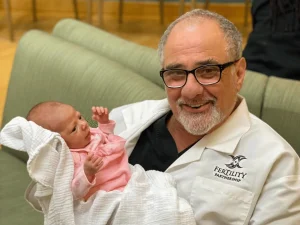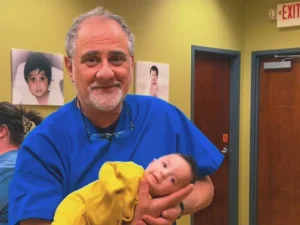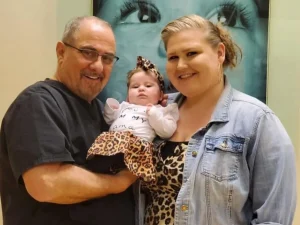
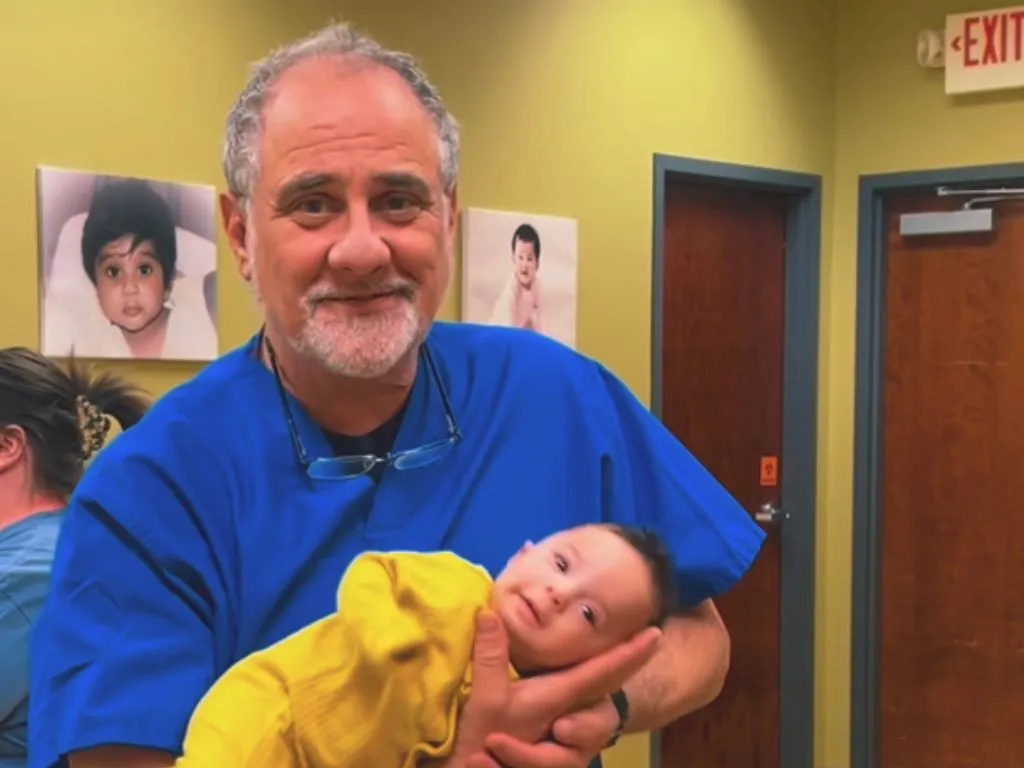
At Fertility Partnership, your first fertility consultation is a chance to sit down with our fertility specialist in St. Louis, Dr. Elan Simckes, and have an open, comfortable conversation about what you’ve been experiencing. Together, you’ll talk through your medical history, previous pregnancies, fertility concerns, and what you’re hoping to understand. Depending on your situation, your evaluation may also include blood tests, a pelvic ultrasound, or a separate semen analysis.
You don’t need to come to Fertility Partnership already knowing which fertility treatment is right for you. Some patients leave their first appointment with a better understanding of what may be contributing to their fertility concerns, while others may need additional testing before our fertility doctor can recommend next steps.
Most importantly, scheduling a consultation does not commit you to intrauterine insemination (IUI), in vitro fertilization (IVF), or any other fertility treatment. It’s simply the first step toward understanding your options and creating a plan that feels right for you.
When Should You Schedule a First Fertility Consultation?
Many patients in St. Louis schedule an initial fertility consultation after one year of regular, unprotected intercourse without becoming pregnant. For those age 35 and older, it’s generally recommended to consult with a fertility specialist after six months of trying to conceive.
There are also good reasons to schedule a fertility evaluation sooner, including:
- Irregular or absent periods
- Recurrent pregnancy loss
- Endometriosis or polycystic ovary syndrome
- Previous pelvic or reproductive surgery
- A known concern involving sperm count or sperm quality
- A medical condition or treatment that may affect fertility
- Plans to freeze eggs or sperm
- Questions about donor eggs, donor sperm, or LGBTQIA+ family building
Age, medical conditions, reproductive history, and how long you have been trying all affect when an infertility evaluation makes sense.
Fertility care is not limited to people who already have an infertility diagnosis. You may also schedule a consultation with Fertility Partnership because you are thinking about egg freezing, planning treatment with donor sperm, or trying to understand your fertility before making decisions about parenthood.
A consultation with Dr. Elan Simckes is also appropriate after treatment at another fertility clinic in St. Louis. A second opinion gives our fertility doctor time to review your medical records, previous test results, medication protocols, and treatment history without assuming the same plan should continue.
How Should You Prepare for Your First Fertility Appointment?
You don’t need to do much to prepare for your first visit, but bringing any relevant medical records or information you already have can help make the appointment as helpful and productive as possible.
Gather your medical records
Previous records give our fertility specialist in St. Louis a better understanding of what has already been investigated.
Bring the following when available:
- Previous fertility bloodwork and test results
- Semen analysis results
- Ultrasound and imaging reports
- Records from prior fertility treatments
- Surgical reports
- A list of current medications and supplements
- Details about prior pregnancies and pregnancy losses
- Relevant family medical history
- Insurance information and co-pay details
- Questions you want to discuss
Patients who have completed IVF at another fertility clinic should also bring stimulation protocols, egg retrieval records, fertilization reports, embryo development records, and embryo transfer information when available.
Do not let missing paperwork stop you from scheduling. Bring what you have. Our fertility clinic can tell you whether any other records are needed.
Write down your menstrual and fertility history
Our fertility doctor in St. Louis will likely ask for the first day of your last period and the usual length of your menstrual cycle. It is also useful to note whether your periods are regular, how you have tracked ovulation, and whether you experience heavy bleeding or pelvic pain.
You may also discuss with Dr. Elan Simckes:
- How long you have been trying to conceive
- Previous fertility medications
- Past pelvic infections
- Endometriosis, fibroids, or ovarian cysts
- Ectopic pregnancy
- Previous pelvic or abdominal surgery
Your family history may include infertility, recurrent pregnancy loss, early menopause, or inherited medical conditions. These details give our fertility doctor more context when deciding which tests are worth ordering.
Bring your partner when applicable
When two partners are part of the fertility evaluation, it is useful for both to attend. The first consultation at our fertility clinic may include questions about both medical histories and a discussion of testing for ovulation, ovarian reserve, the uterus, fallopian tubes, and sperm.
The appointment should still fit the family you are planning. A partner’s attendance or medical history may not be relevant for every individual, couple, or family-building arrangement.
What Happens During Your First Fertility Consultation?
During your first fertility consultation at Fertility Partnership in St. Louis, you will talk with our fertility specialist about why you scheduled the appointment, what you have already experienced, and what you want to understand.
Testing differs from one patient to another. Some fertility clinics complete bloodwork and a pelvic ultrasound during the first visit. Other tests may need to be scheduled for a certain point in the menstrual cycle.
Reviewing Your Medical and Fertility History
The first consultation usually begins with a personal conversation. Our fertility doctor may ask about:
- Menstrual and gynecological history
- Prior pregnancies or miscarriages
- Previous surgeries
- Medical conditions
- Family medical history
- Prior fertility testing or treatment
- Current medications
- Egg freezing or family-building goals
The conversation may also cover smoking, alcohol, substance use, exercise, and nutrition when those details relate to reproductive health or medication safety.
At Fertility Partnership, this part of the appointment takes place directly with Dr. Elan Simckes. He reviews what brought you to our fertility clinic, what has already been investigated, and which questions still need to be answered.
What a Pelvic Ultrasound Can Show
A pelvic ultrasound examines the uterus, uterine lining, ovaries, and visible follicles. It may identify fibroids, ovarian cysts, or other findings that need further review. The visible follicle count also contributes to an evaluation of ovarian reserve.
A pelvic ultrasound cannot show whether the fallopian tubes are open. A separate test may be recommended when that information is needed.
At Fertility Partnership, Dr. Simckes personally performs the ultrasound. Our fertility clinic’s broader fertility testing may also include hormone testing, ovulation evaluation, and separate semen analysis.
Blood Tests and Hormone Testing
Fertility blood tests may assess ovulation, ovarian reserve, thyroid function, and other medical factors associated with conception.
Bloodwork may include:
- AMH, or anti-Müllerian hormone: Reviewed with age and ultrasound findings as part of an ovarian reserve evaluation
- FSH, or follicle-stimulating hormone: A hormone involved in follicle development
- Estradiol: A form of estrogen interpreted according to cycle timing
- TSH, or thyroid-stimulating hormone: Used to assess thyroid function
- Progesterone: Sometimes measured to determine whether ovulation occurred
Some fertility blood tests need to be completed during a specific part of the menstrual cycle, while others can be done at any time. Our fertility doctor may also discuss genetic screening or additional laboratory testing based on your medical history, family history, or possible treatment plan.
The results are reviewed alongside the ultrasound, medical history, and any semen analysis findings. No single hormone level gives a complete explanation on its own. Blood tests, imaging, and other infertility tests are considered together.
At Fertility Partnership in St. Louis, bloodwork may be completed during the first visit when appropriate. Patients whose insurance requires a specific laboratory may receive an order to have testing completed there instead.
Evaluating Sperm Health
When sperm is part of the family-building plan, semen analysis is usually completed alongside the female fertility evaluation.
The test looks at sperm count, movement, and shape. These results may show whether male factor infertility is contributing to difficulty conceiving.
One result does not always give a complete answer. Repeat testing, hormone bloodwork, or further medical evaluation may be recommended when the findings need confirmation or more context.
Fertility Partnership offers semen analysis in a separate visit as part of its diagnostic fertility testing when it is relevant to the patient’s evaluation.
Will You Receive a Fertility Treatment Plan at the First Visit?
It is common to leave the first fertility appointment with a testing plan rather than an immediate infertility treatment recommendation.
Our fertility doctor may discuss an initial impression based on your history, examination, pelvic ultrasound, and previous records. A more complete plan often follows after bloodwork, semen analysis (a separate visit, if needed), or other test results are available.
Depending on the findings, fertility treatment options may include:
- Monitoring ovulation or timing intercourse
- Ovulation induction with medication
- Intrauterine insemination, which places prepared sperm into the uterus near ovulation
- In vitro fertilization, which includes ovarian stimulation, egg retrieval, fertilization, embryo development, and embryo transfer
- INVOcell, which uses a vaginal device during fertilization and early embryo development
- Egg freezing or sperm freezing
- Donor eggs or donor sperm
- Further diagnostic testing
Not every patient needs IVF. A first IVF consultation also does not mean an IVF cycle should begin immediately. Fertility treatment plans are based on age, ovarian reserve, sperm results, uterine and tubal findings, previous treatment, medical conditions, and your goals.
Common Questions About a First Fertility Consultation
How long does the first appointment at Fertility Partnership take?
First appointment length at our fertility clinic depends on what is included. The conversation with our fertility specialist may take 30 minutes or longer. Registration, ultrasound, bloodwork, and time with our nurse or financial team may extend the full visit. Ask our fertility clinic how much time to allow when scheduling your first appointment.
Will I begin fertility treatment immediately?
Usually, testing and record review come first. This gives you time to understand the recommendation, ask questions, discuss costs, and consider the options before fertility treatment begins.
Does insurance cover a fertility consultation?
Coverage varies between insurance plans. Before the first appointment, ask about co-pays, deductibles, laboratory coverage, ultrasound coverage, and fertility benefits.
Our fertility clinic can explain the billing process and available fertility financing, but the insurance company determines what your policy covers.
Schedule Your First Fertility Consultation in St. Louis
You don’t need to have everything figured out before meeting with our fertility doctor. Your first consultation is simply a chance to share what you’ve been experiencing, ask questions, and learn what information or testing may be helpful as you move forward.
At Fertility Partnership, Dr. Elan Simckes brings more than 30 years of experience in reproductive medicine and infertility care. He meets with patients personally, performs his own ultrasounds, and takes the time to explain his findings before talking through the options that may be right for you.
We also understand that navigating fertility care involves more than just medical decisions. Fertility Partnership works with insurance and financing options to help make care more accessible. For in-person appointments, a complimentary Spanish translator is also available when requested at the time of scheduling.
Schedule your first fertility consultation with Fertility Partnership to meet with Dr. Simckes in Greater St. Louis today.